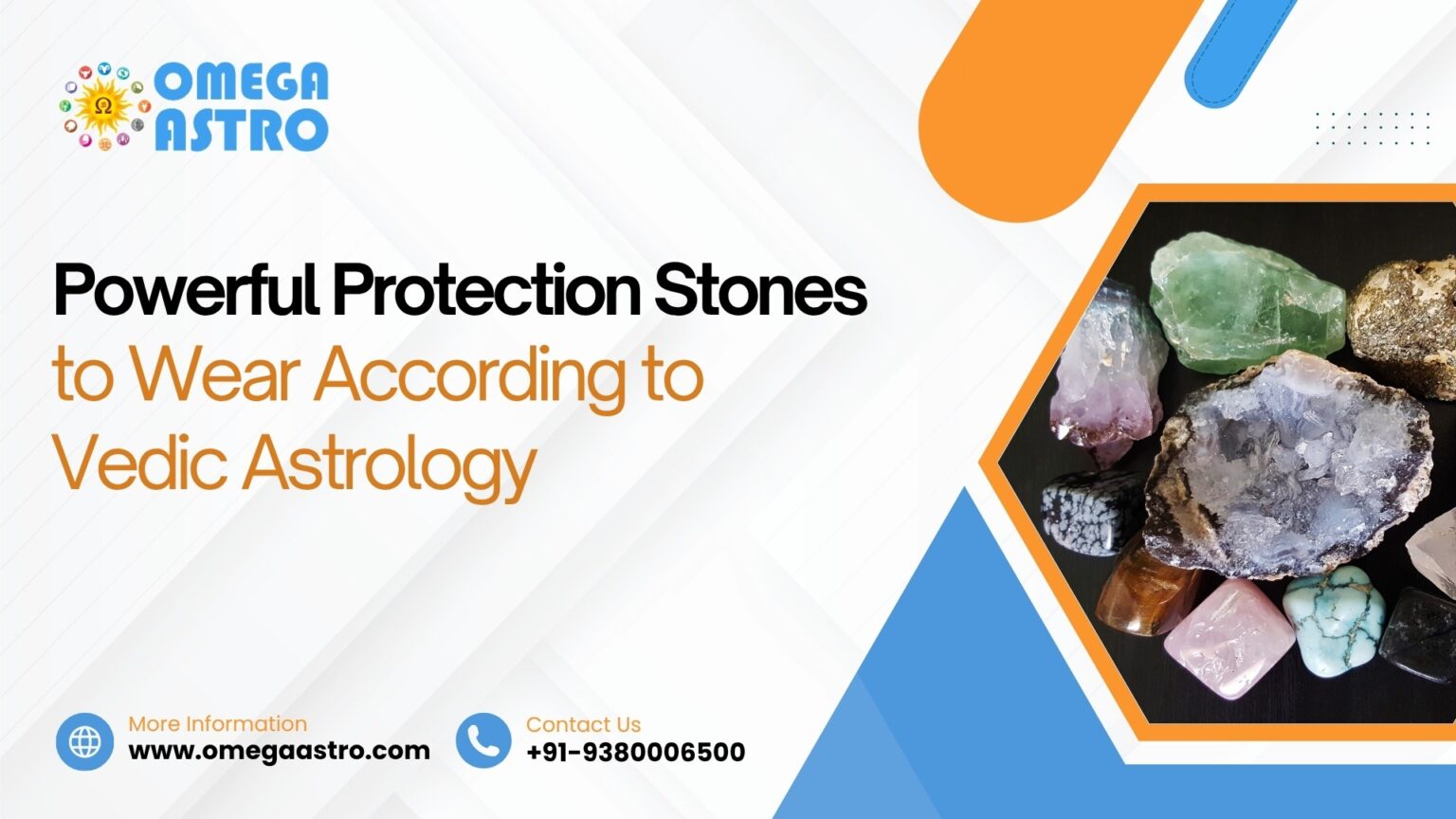
As per Vedic astrology, some of the most common protection stones to wear are Blue Sapphire, Hessonite, Cat’s Eye, Red Coral, Yellow Sapphire, and Navaratna. But in Vedic astrology, not one gemstone is considered to be good for everyone. Traditionally, the right stone is selected after analyzing the person’s birth chart, planetary strengths, and the function of different planets.
In Jyotish, gemstones are related to the Navagraha, or nine planetary influences. The traditional Navaratna system is that ruby is associated with the Sun, pearl with the Moon, red coral with Mars, emerald with Mercury, yellow sapphire with Jupiter, diamond with Venus, blue sapphire with Saturn, hessonite with Rahu, and cat’s eye with Ketu.
These associations are part of the astrological tradition and should not be interpreted as scientifically proven protection against physical danger or disease.
Which Gemstone Is Best for Protection?
There is no one single gemstone that is the best protection stone for all people. In traditional Vedic astrology, the choice of gemstone is not determined by popularity but is based on the individual’s Kundali.
Some charts may require Blue Sapphire in relation to Saturn; some may require Hessonite, Cat’s Eye, Red Coral, or some other planetary gemstone. This is why a chart-based recommendation is usually better than a generic list of gemstones.
What are the protective stones used in Vedic astrology?
Different gemstones are associated with different planetary influences and are used for different astrological purposes. Here are some of the stones people discuss that help with spiritual protection, stability, confidence, or help during difficult planetary times.
| Gemstone | Vedic association | Traditional connection |
| Blue Sapphire (Neelam) | Saturn | Discipline, stability, and protection during difficult Saturn periods |
| Hessonite (Gomed) | Rahu | Traditionally associated with managing Rahu-related uncertainty |
| Cat’s Eye (Lehsunia) | Ketu | Traditionally linked with spiritual protection and detachment |
| Red Coral (Moonga) | Mars | Courage, energy and confidence |
| Yellow Sapphire (Pukhraj) | Jupiter | Wisdom, guidance and positive growth |
| Ruby (Manikya) | Sun | Confidence, vitality and authority |
| Emerald (Panna) | Mercury | Clarity, communication and intellect |
| Pearl (Moti) | Moon | Emotional calm and mental balance |
| Diamond (Heera) | Venus | Harmony, attraction and relationships |
The planetary associations above come from the traditional Navaratna system.
Why is Blue Sapphire a strong protection stone?
Blue Sapphire or Neelam is traditionally associated with Saturn, who is called Shani in Vedic astrology. It is often used in relation to discipline, responsibility, patience, stability, and coping with difficult situations.
Blue Sapphire is said to strengthen Saturn quickly, so many Jyotish practitioners recommend checking the full birth chart before wearing it. The strength of a planet is not always a good gemstone for all horoscopes.
From a gemological point of view, Blue Sapphire is also a hard gemstone. Sapphire has a Mohs hardness of 9; it is durable and tough enough for everyday wear when properly cared for.
Is Hessonite a protective stone in Vedic astrology?
Hessonite, also known as Gomed or Gomedh, is traditionally associated with Rahu. In Vedic astrology, Rahu is one of the lunar nodes, and it is associated with unpredictability, abrupt shifts, drive, and atypical experiences.
Hence, Hessonite may be recommended sometimes when a person is going through difficult Rahu periods. However, it should not be chosen simply because you want a general protection stone.
Depending upon the Kundali, a proper astrological assessment can help in deciding whether strengthening Rahu is appropriate or not.
Why is Cat’s Eye associated with spiritual protection?
Cat’s Eye or Lehsunia is traditionally connected to Ketu. In Jyotish traditions, Ketu is associated with detachment, spirituality, intuition, sudden changes, and inward reflection.
These associations have led some to describe Cat’s Eye as a protective or spiritually oriented gem. But like Hessonite and Blue Sapphire, it is believed to be a powerful planetary gemstone in the traditional way and should be selected carefully.
The appearance of a gemstone alone does not establish its identity or quality; therefore, Cat’s Eye should also be correctly identified before purchase.
Can Red Coral give courage and protection?
Red Coral is also known as Moonga and is related to Mars or Mangal. Traditionally, Mars is the planet of courage, physical energy, determination, initiative, and the ability to confront challenges.
So, for people who specifically want an astrological gemstone connected with courage, Red Coral may be considered. But the suitability of Mars and its gemstone depends upon the individual horoscope.
Red Coral also differs from many transparent gemstones in that it is an organic gem material. Therefore, its care requirements should be taken into consideration before regularly wearing it.
Is Navaratna a good option for general cover?
Navaratna means nine gems and is usually a combination of nine gems associated with the nine Navagrahas. The classical groups are ruby, pearl, red coral, emerald, yellow sapphire, diamond, blue sapphire, hessonite, and cat’s eye.
Sometimes, people prefer a more comprehensive traditional astrological remedy over a single planetary gemstone. They may choose Navaratna jewelry, which represents all nine planetary associations.
However, wearing 9 stones together should not be taken for granted to be suitable for every birth chart. The astrologer may look at individual planets before suggesting such a combination, and the traditional method may be different.
How do you choose protection stones to wear?
If you want to wear a gemstone for astrological reasons, do not choose it by color, zodiac sign, or a general list online.
One practical process is:
- Keep your birth information handy: A Kundali is generally prepared with date, exact birth time, and birth place.
- Memorize the planetary placements: The Vedic astrologer examines the Ascendant, houses, strength of planets, and the planetary periods.
- Choose the planetary gemstone: The gem should be of a planet which the astrologer thinks should be strengthened.
- Look at the gem itself: Check the identity, quality, treatments, and documentation of the gemstone before buying.
- Pick the setting and how to wear it: Traditional advice could be the metal, finger, weight, and day of wearing.
This method is more beneficial than purchasing a gemstone simply because it is advertized as a “powerful protection stone.”
Why is Omega Astro your most reliable gemstone partner?
Choose your gemstone with care and not on a whim. Omega Astro can help you understand the traditional Vedic astrology link between gemstones and planetary influences and help you to choose based on your individual birth chart.
Omega Astro aims to make the process of choosing your gemstone more practical, transparent, and easy to understand, with a focus on personalized astrological guidance. If you are considering wearing protection stones, consult Omega Astro to find out which traditional gemstone may be suitable for your astrological needs.
Frequently Asked Questions
Can I wear a protection stone without checking my Kundali?
You can wear gemstones as jewelry, but if your purpose is a Vedic astrological remedy, traditional practice generally favors selecting the stone according to the individual birth chart.
Is Blue Sapphire safe for everyone to wear?
Blue Sapphire is traditionally associated with Saturn and is not generally treated as a universal gemstone in Jyotish. Its suitability is usually assessed from the individual horoscope.
Are protection stones scientifically proven to protect a person?
No. The protective and planetary effects discussed in Vedic astrology are traditional or spiritual beliefs and are not established scientific effects.
Can I wear Navaratna instead of one gemstone?
Navaratna contains nine traditional planetary gemstones. It may be used in certain traditional settings, but whether it is suitable for a particular person can still depend on the astrological approach and birth chart.
How can I know whether a gemstone is genuine?
For valuable gemstones, ask for clear information about the stone’s identity, natural or synthetic status, treatments, and an appropriate independent gemological report.